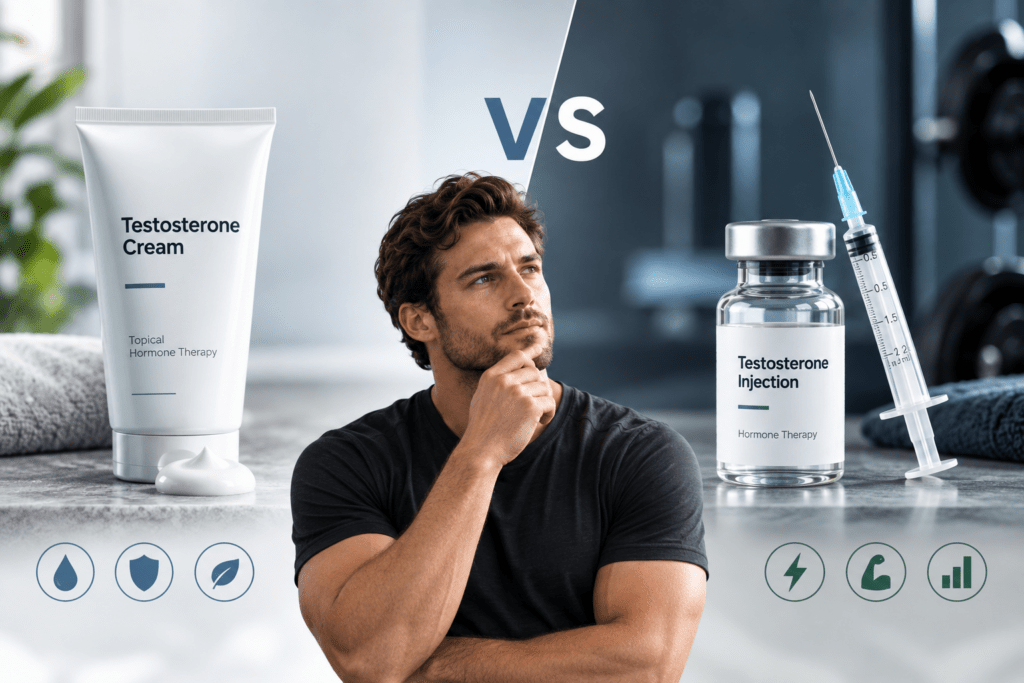
What Is Testosterone Cream?
Testosterone cream is a topical form of testosterone that is applied directly to the skin. Depending on the product, it may be applied to areas such as the shoulders, upper arms, thighs, or other areas recommended by your healthcare provider.
Some specialized testosterone creams are designed for application to specific areas of the body.
Because testosterone is absorbed through the skin, cream is typically used every day.
Pros of Testosterone Cream
No needles: Testosterone cream is a good option for people who do not want to give themselves injections.
Steady daily delivery: Daily application can provide a more gradual supply of testosterone rather than the larger peaks and drops that can occur with some injection schedules.
Easy to use: Applying a cream can be simple and can become part of your daily routine.
Potentially higher DHT conversion: Some topical testosterone formulations can produce significant conversion of testosterone into dihydrotestosterone (DHT). DHT plays a role in sexual function and other processes in the body. However, more DHT does not automatically mean better results.
Cons of Testosterone Cream
Daily application: You need to remember to apply the medication consistently, usually every day.
Variable absorption: How much testosterone gets through the skin can vary from person to person. Skin thickness, application technique, the specific product, and other factors can affect absorption.
Risk of testosterone transfer: Testosterone can transfer to another person through skin-to-skin contact if the application site has not been properly covered or cleaned. This is especially important when living with children or having close physical contact with a partner.
Skin irritation: Some people may experience redness, irritation, or other skin reactions where the medication is applied.
What Are Testosterone Injections?
Testosterone injections deliver testosterone directly into the body through an injection. Depending on the testosterone formulation and treatment plan, injections may be given weekly, every two weeks, or at other intervals.
Some people divide their prescribed dose into smaller, more frequent injections to help maintain more consistent testosterone levels.
Pros of Testosterone Injections
Predictable delivery: Injections bypass the skin, so absorption is not affected by the skin barrier.
Less frequent dosing: Unlike daily cream, injections may only be needed once or several times per week, depending on the treatment plan.
No risk of skin-to-skin transfer: Because testosterone is injected rather than applied to the skin, there is no concern about accidentally transferring testosterone through contact with the application site.
Often affordable: Standard injectable testosterone can be less expensive than some specialized or compounded topical testosterone products.
Cons of Testosterone Injections
Needles: You must use a needle, which can be uncomfortable or stressful for some people.
Injection-site reactions: Pain, bruising, swelling, or irritation can occur after an injection.
Possible hormone fluctuations: Depending on the testosterone type, dose, and injection schedule, testosterone levels can rise after an injection and fall before the next dose. Some people notice changes in energy, mood, or other symptoms during these fluctuations.
Hematocrit can increase: Testosterone therapy can increase red blood cell production. Injectable testosterone, particularly certain dosing schedules, may have a greater effect on hematocrit than some topical treatments. Your healthcare provider should monitor your blood counts during treatment.
Testosterone Cream vs. Injections: Key Differences
The two methods differ in how they are administered, how often they are used, absorption, transfer risk, cost, and their potential effects on hormone levels and hematocrit.
Testosterone Cream vs. Injections
| Feature | Testosterone Cream | Testosterone Injections |
|---|---|---|
| How it’s given | Applied to the skin | Injected into the body |
| Typical frequency | Usually daily | Often weekly or less frequently |
| Needles | No | Yes |
| Absorption | Can vary between people | Generally more predictable |
| Hormone levels | Can provide gradual daily exposure | May fluctuate depending on dosing schedule |
| Transfer risk | Yes | No |
| Skin irritation | Possible | No topical irritation |
| Injection pain | No | Possible |
| Cost | Varies by product | Often relatively affordable |
| DHT conversion | Can be significant with some formulations | Also converts to DHT, but differently |
| Hematocrit | Can increase | Can increase, sometimes more significantly |
Which Is Better: Testosterone Cream or Injections?
There is no single testosterone treatment that is best for everyone.
Testosterone cream may be a better choice if you:
- Want to avoid needles.
- Prefer daily treatment.
- Want gradual testosterone delivery.
- Can consistently apply the medication.
- Can prevent accidental skin-to-skin transfer.
Testosterone injections may be a better choice if you:
- Prefer less frequent treatment.
- Don’t mind injections.
- Want predictable medication delivery.
- Want to avoid the risk of transferring testosterone to another person.
- Prefer a treatment that is often less expensive.
What About Testosterone Levels and the “Rollercoaster” Effect?
One common concern about testosterone injections is that they can cause testosterone levels to rise and fall.
This can happen with larger injections given at longer intervals. Some people may notice changes in energy, mood, or other symptoms as testosterone levels change.
However, injections do not automatically cause a rollercoaster effect. The type of testosterone, dose, and injection schedule all matter. Smaller, more frequent injections can produce a different pattern than a large injection given every one or two weeks.
Your healthcare provider can adjust the treatment schedule based on your testosterone levels, symptoms, and response to treatment.
What About DHT?
Testosterone is naturally converted into another hormone called dihydrotestosterone (DHT).
DHT is involved in sexual development, libido, prostate function, and other processes in the body.
Some topical testosterone products can result in significant DHT conversion. However, higher DHT levels are not automatically better. More DHT may also contribute to unwanted effects in some people, such as increased hair loss or prostate-related symptoms.
The goal of testosterone replacement therapy is not simply to maximize testosterone or DHT. The goal is to bring hormone levels into an appropriate range while improving symptoms and minimizing side effects.
TRT Requires Regular Monitoring
Whether you use testosterone cream or injections, treatment should be monitored by a qualified healthcare provider. Monitoring helps confirm appropriate hormone levels, evaluate symptoms, and identify potential side effects.
Testosterone Therapy Requires Monitoring
Your healthcare provider may monitor:
- Testosterone levels
- Hematocrit and hemoglobin
- Symptoms and treatment response
- Prostate health when appropriate
- Blood pressure and other health factors
- Potential side effects
Testosterone replacement therapy is generally recommended for men who have symptoms of testosterone deficiency along with consistently low testosterone levels confirmed through appropriate testing.
The Bottom Line
Both testosterone cream and testosterone injections can be effective forms of testosterone replacement therapy.
Cream offers a needle-free option and may provide gradual daily testosterone exposure, but it requires daily application and carries a risk of transferring testosterone through skin contact.
Injections provide predictable delivery and require less frequent administration, but they involve needles and can cause testosterone levels to fluctuate depending on the dosing schedule.
The right choice comes down to your medical needs, treatment goals, lifestyle, cost, and personal preference. Talk with your healthcare provider about which testosterone replacement option makes the most sense for you.
Find the TRT Option That Fits You
A Valyr Health clinician can review your symptoms, lab results, health history, and preferences to discuss an appropriate testosterone treatment plan.